Monday, March 25, 2013

Give the Kids a Break

When I started Breaking as a teenager, it was something I generally kept secluded from the Armenian community.

The idea that my parents or community members would be morally (let alone financially) supportive of seeing their child doing a dance that was out of the norm and completely outside the confines of our traditional culture was unfathomable.

You can then probably imagine how pleasantly surprised I was to see a packed auditorium full of Armenian parents cheering for their kids in a Breaking contest this past weekend.


The competition was hosted by the "Aleks Style" Breaking school, which is located in the Arabkir region of Yerevan. It was held exclusively for the over 60 students that go to the school. I was one of the invited judges and got a front row seat for the daylong contest which featured four separate categories: kids, juniors, girls, and older boys.

Aside from the dancing, I couldn't stop looking into the audience to see how the parents reacted to their kids battling it out and putting their moves out on the floor. It was great to see the pride and joy on all of their faces as they watched their kids have fun and compete with respect.

I should note that this is a school where parents pay for their kids to go to learn the dance (something which doesn't even exist in LA, to my knowledge)--and it is by no means the only one. I can count at least 10 separate schools here where kids go on a weekly basis to learn and practice their skills. 

The interest is high. There are literally hundreds of kids Breaking in Armenia.

Although I was impressed by what I saw, I also have to admit that the "school system" of teaching and practicing Breaking definitely gives the dance a different flavor. There is something that is taken away when all the Breakers know is instruction and regiment, with very little social dancing.

Even the competition was very tournament-like, with an official award ceremony at the end and everything. The dancing and expression element was not totally absent, but it was definitely lacking.

Nevertheless, there was a lot of talent and unquestionable love for the dance in the building.

Next stop is the national "Grand Street Jam" coming up this Saturday, which I'll also be judging. The top five Breakers from the competition will be going to Georgia in April to represent Armenia at the Red Bull BC One Caucasus qualifier.

Should be interesting.

Saturday, March 16, 2013

Youth Sit-In Freedom Square

Parallel to Raffi Hovannisan's hunger strike is a diverse and active group of youth who have been staging a sit-in in Freedom Square, calling for Serzh Sarkissian to step down.

“We all know that Raffi won the elections,” says Narek Varazdatyan, a staunch young ally of Hovnannisian participating in the sit-in. “We are calling for Serzh Sarkissian to vacate Baghramian 26 [the Presidential Palace]. I personally will be sitting here until he leaves.”

The youth number about 30, give or take.

They hold placards, sing songs, and dance in protest of the fraudelent elections and in support of a democratic Armenia.

Whether coincidentally or not, I found them sitting singing "Gini Lits" (the song dedicated to the assassanitation of Talaat Pasha) a day before Soghomon Tehlirian's famous operation's anniversary.


Some among them are Heritage Party youth, while others are from the ARF, People's Party, Armenian National Congress, or various civic initiatives or just concerned citizens.

For me, these youth represent a more hopeful model for change than the individualistic approach taken by political parties and figures on the political scene in Armenia. Through their collective, unified, and horizontal activism, they present a more healthy alternative and road map for where the opposition needs to go than anything else. Furthermore, they are basing their action on a clear sense of national responsibility and a desire for a future based on justice and deepening democracy.

Sunday, March 3, 2013

Mad Force in Dynamo

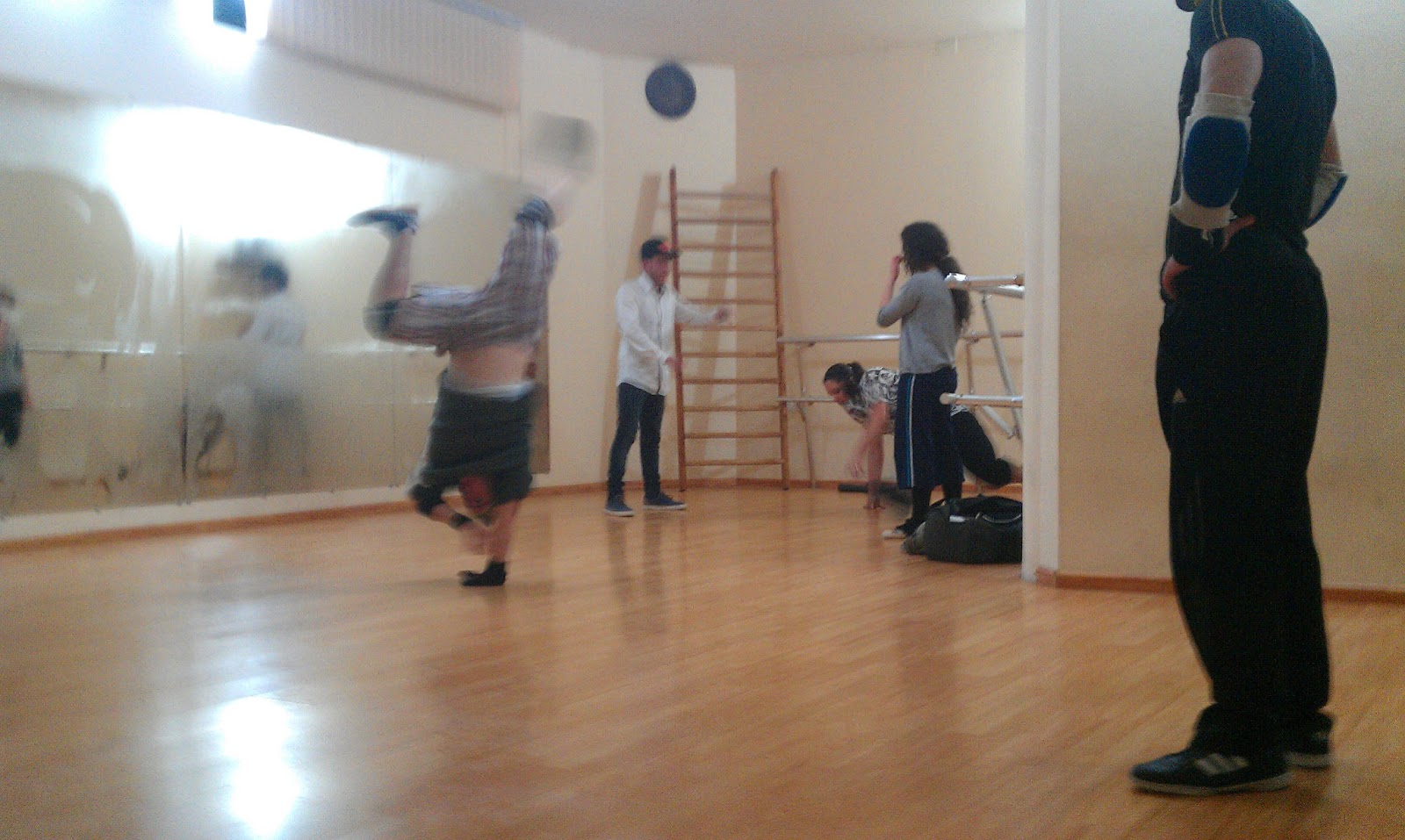
I finally got a chance to get my first Breaking practice in the other day since arriving to Armenia. My close friends from the Mad Force Crew invited me to their bi-weekly session at the Dynamo Sports Complex in Yerevan.


A little known fact is that Armenia has the largest street dance scene in the Caucasus, with hundreds of dancers and countless practices happening every day of the week.

When I first met Mad Force Crew in 2005, there were only 1 or 2 other groups in the country with maybe no more than 50 dancers total in the city. These guys and girls kept pushing the dance, even when people looked at it with an evil eye, and now it has ballooned to an extent nobody expected.

There are even large-scale competitions and events happening regularly, with the next one slated for late-March.


This practice was in a studio on the basement floor of a large sports complex that featured a boxing ring, workout room and stadium next door.  It was a mixture of people practicing individually and the more experienced dancers teaching the younger kids basics.

It felt good to get out on the floor and shake off the cob webs. Seeing the younger generation doing something positive and improving upon what was passed down to them was also inspiring. 

Yerevan is definitely active.

Thursday, February 28, 2013

The Rallying Call

I attended another rally today in Freedom Square in protest of the recent presidential elections. Several people gave speeches criticizing the ruling regime, calling for true democracy in the country, and celebrating the "victory" of the people. This latter refrain was repeated throughout, referring to Raffi Hovhannesian being the true winner of the presidential elections, as well as the notion that the people voting for him and attending his rallies have broken the stereotype of Armenian citizens as hopeless and apathetic.


Raffi's speech seemed to suggest that the movement was going to be a prolonged one, as he asked the audience if they were ready to stick it out with him in the long haul. He also asked the crowd whether they thought he should submit his case to the Constitutional Court and whether they should present to the people his administration's future governmental posts. 

It was also announced that a commemoration of the March 1st events would be held by Raffi tomorrow, which the Armenian National Congress has joined onto, and that a concert would be held on Saturday in Liberty Square, where Raffi promised to reveal where his movement would be going.


If the momentum generated by Raffi's campaign can be transformed into a healthy, unified, and sustained opposition to the regime, these election developments have the potential to be a positive turning point for the country. There is definitely a rising tide of civic discontent displayed by the turnout at the rallies across the country.

But it would do well to remember that it's not the first time this has happened. Presidential elections in Armenia from 1996 to 2008 have seen even larger outpourings of protest with not much of an effect. It remains to be seen what action will come out of these developments and if the crowd gathering can be turned from spectators to organized and active citizens of change. I certainly hope that will be the outcome.

My sense is that even the people at the rallies are getting impatient with speeches. Everyone is eager to see what the next steps will be.


Meanwhile, following the rally, a group of university students involved in the recent
4-day student strike held a public meeting in the square about how they would move forward with their initiative. They discussed their agenda and then opened the floor for people, both young and old, to speak their mind. Again, the overriding criticism expressed by speakers from the crowd was that there was no long-term plan or clearly expressed end goal of the campaign.

Monday, February 25, 2013

Thursday, February 21, 2013

Think Global, Act Local

I had the opportunity this past weekend to travel throughout southern Armenia as part of a delegation from the Foundation Against the Violation of Law (FAVL) NGO.

We went to Civic Centers the organization has been operating in Vayq, Kapan, Meghri, Sisian, and Yeghegnadzor for the last several years, working to develop civic engagement and grassroots participation in local governance in the remote regions of Armenia. 


The main purpose of the trip was to go over the local strategy and public relations for the upcoming year with the staff and volunteers at each of the centers. The emphasis for 2013 will be on working with women and youth to mobilize them around issues facing their communities.


It is worth noting that women and youth make up a majority of Armenian society and face a multitude of social, economic, and political issues. Yet, they are glaringly absent from the reigning public discourse and off the radar of most of the main political forces, especially in the regions. 


It was inspiring, to say the least, to be able to meet and discuss issues with men and women working to improve their towns, cities, and villages. An added bonus of the trip was the ability to see the breathtaking view and beautiful mountainous geography of Armenia's south.


The strength of the country is definitely beyond simply Yerevan. The nation begins from the smallest unit and builds from the bottom upward. From the ruralest of villages to the biggest of cities.

I'm convinced that the way forward is to galvanize popular democracy from local communities on up, and not the other way around.

I'm heading to the Vayq Center again today.

Beautification in Bangladesh


Today, I met up with a longtime friend of mine named Ani in the Malatia district of Yerevan, commonly referred to as "Bangladesh".

As we were waiting for a "Marshrutka" at a stop near the large Holy Trinity Church there, we unexpectedly noticed a group of workers chainsawing about 15-20 trees in the middle of a green space across from the church.

Ani (who is an environmental activist and extremely outspoken young citizen) was immediately struck by the scene. She approached the workers and asked what they were doing cutting these trees into stumps, and who gave them permission to do so.

The responded saying they are "putting in order" and "beautifying" the space by cutting the trees in order to cover the area with grass. In their words, the trees were obstructing the views of cars so it was decided to chop them down. They said they had the proper permission to do so but were visibly shaken by someone daring to ask what was going on. We could also see that the stumps were being covered over with soil and leaves so as to hide the sawing that was taking place.

With both of us dumbfounded by their explanation and the situation, we both began recording what was going on and Ani demanded to see documentation showing they had permission. When they said they didn't have it on them, she called the police.

While we waited for the police to show up, passerby's began stopping and supporting our efforts to stop what they had long seen taking place. One citizen even gave us the number to Aravot newspaper, urging us to call them to cover what was happening. We contacted them and any other media outlets we had information for.

 Civilnet reporters were the only ones who showed up on the scene, while journalists from Ecolur and Aravot spoke to us over the phone (here is Ecolur's and Civilnet's coverage of the incident).

We also both went to the police station and filed an official report about what happened. The police said they will pursue the matter and find out whether there is city permission for the cutting or whether this is an illegal operation. By the time we left, the workers still had not submitted any documentation showing permission.

Such acts often turn out to be private endeavors, with local property owners or private businessmen hiring a company to "beautify" an area near their establishment without the proper paperwork. It was clear from talking to the workers at the site that they worked for a private firm and seemed uneasy about their cutting down of healthy trees, though they still sought to justify it as it was putting some income in their hands.


Ani's action served to stop the cutting at least for the day, something which the local, mostly older residents were clearly in support of--but apparently not bold enough to express on their own. She spread the news to her fellow activists and took down the information for the police officer and his vehicle, promising to follow up and take next steps.

For me, Ani's action showed that the problems facing the city and larger society are only a reflection of a passivity among the public and lack of organization which younger activists like her are seeking to break. She is a firm believer that changing the future of the country requires people to change how they deal with such violations and injustices they see around them. For her, passive complaints and proclamations are meaningless without action, direct and unadulterated.

It was an inspirational and educational moment, to say the least.